
The best air compressor for home garage use in 2026 depends less on brand hype and more on what tools you actually run, how much space you have, and how much noise your household will tolerate.
If you buy based on “max PSI” alone, you’ll often end up with a compressor that either cycles nonstop (not enough airflow) or feels like overkill (too loud, too big, too expensive). The good news is you can get this right with a few numbers and some practical tradeoffs.
This guide helps you match compressor type and specs to real garage jobs, includes a quick comparison table, and finishes with a simple buy checklist so you can pull the trigger confidently.
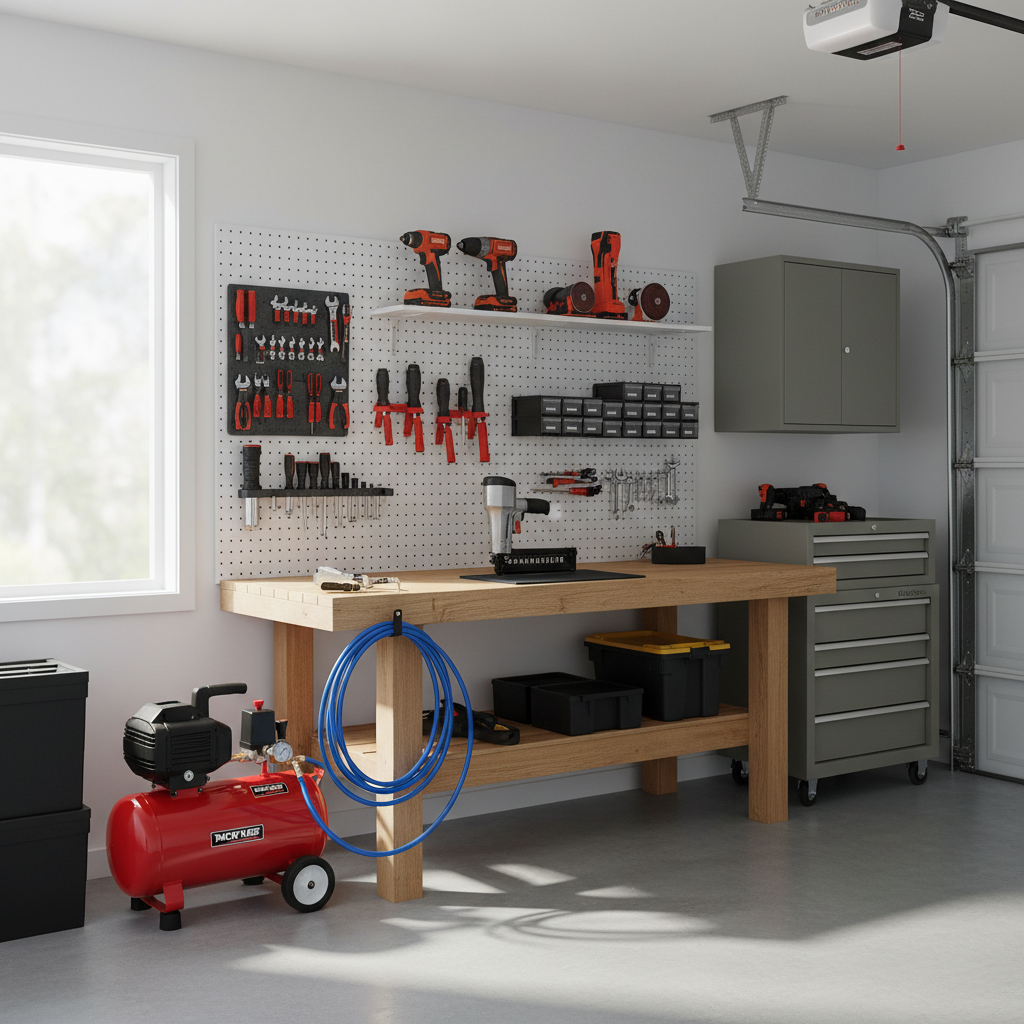
What “best” really means for a home garage compressor
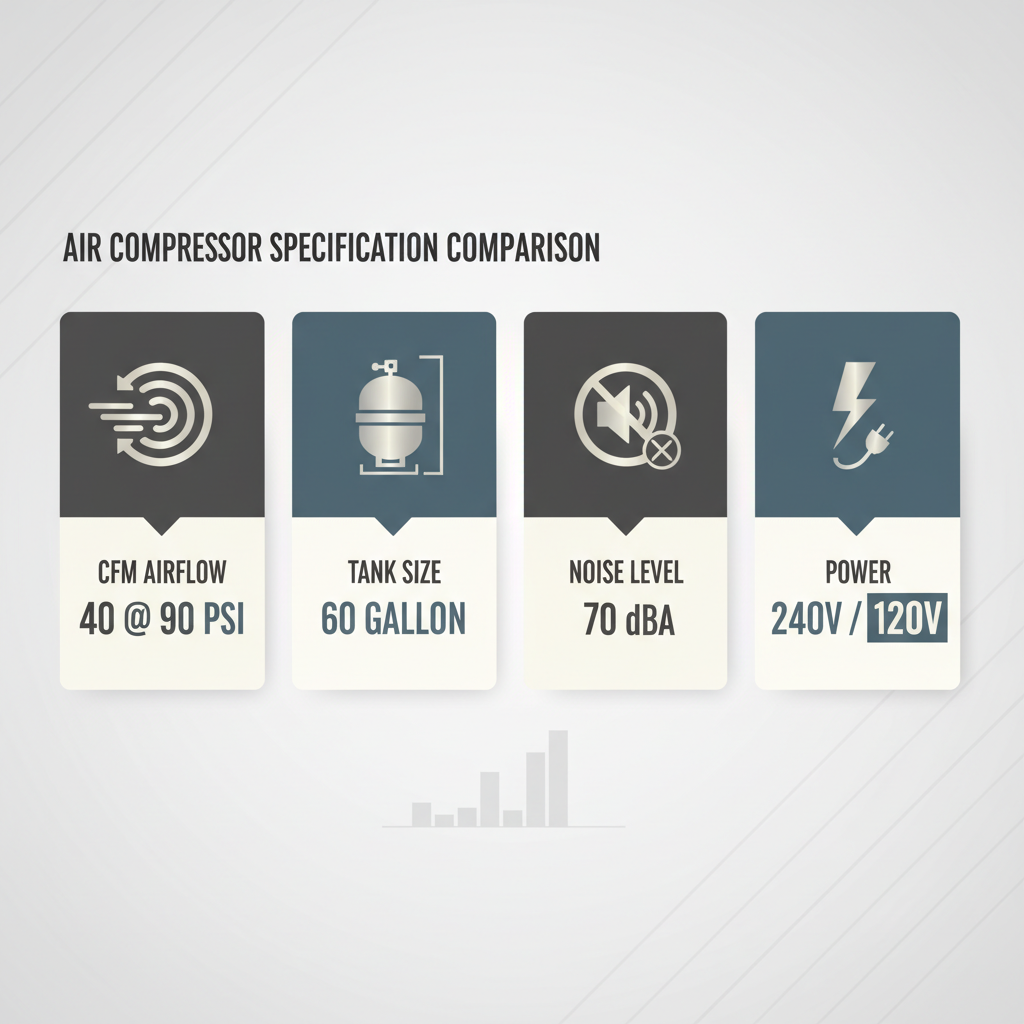
Most home garages need a compressor that starts reliably, keeps up with your highest-demand tool, and doesn’t make you avoid using it because it’s obnoxiously loud. In practice, “best” usually means balancing four things:
- Airflow (CFM): how much air the pump delivers, which determines what tools it can run.
- Tank size (gallons): how long you can work before the motor kicks on again.
- Noise (dBA): whether you can talk over it, or you’ll only run it midday.
- Power and voltage: 120V convenience vs 240V performance and smoother starts.
According to OSHA, workplace noise can become a hearing risk depending on level and exposure time, so if your compressor is loud and you use it often, hearing protection is a sensible precaution and you can ask a safety professional if you’re unsure.
Key specs to understand (without getting lost)
CFM at 90 PSI: the spec that decides which tools you can run
Ignore “peak HP” marketing and focus on CFM at 90 PSI. Many air tools are rated around 90 PSI, and that airflow number correlates better with real performance than maximum pressure.
- Light duty (inflation, blow gun, small nailers): often fine around 2–4 CFM @ 90.
- DIY auto work (ratchets, some impacts in short bursts): look closer to 4–6 CFM @ 90.
- Air-hungry tools (die grinders, sanders, continuous spraying): typically want 6–10+ CFM @ 90.
If you’re shopping for the best air compressor for home garage projects that include sanding or grinding, you’re in “airflow-first” territory, that’s where many people underbuy.
Tank size: not power, but patience
A bigger tank doesn’t magically increase output, but it gives you a larger air reserve. That means fewer rapid on/off cycles and a more pleasant workflow for intermittent tools.
- 1–6 gallons: portable, great for nailers and quick inflation.
- 8–20 gallons: versatile middle ground, better for moderate DIY tool use.
- 20–60 gallons: stationary “shop” feel, good for frequent use and higher demand.
Noise level: the spec you’ll feel immediately
Noise ratings vary by manufacturer methods, but they still help. Many homeowners find that around 60–70 dBA is tolerable, while 80+ dBA quickly becomes “I’ll do it later.” If your garage shares walls with living space, it matters even more.
Oil-free vs oil-lube: convenience vs longevity (usually)
Oil-free units are popular for low maintenance and portability. Oil-lubricated compressors often run cooler and may last longer in many cases, but they add maintenance and potential oil carryover concerns for painting unless you add filtration.
Quick comparison table: common home garage scenarios
Use this as a practical starting point, then verify your specific tool requirements.
| Garage use case | Recommended compressor style | Target CFM @ 90 PSI | Typical tank | Notes |
|---|---|---|---|---|
| Tires, blow gun, brad/finish nailer | Quiet portable, oil-free | 2–4 | 1–6 gal | Fast setup, easy storage |
| DIY automotive (impact in bursts, ratchet) | Portable “wheelbarrow” or compact horizontal | 4–6 | 8–20 gal | Check tool CFM, avoid tiny tanks |
| Occasional spray painting (small panels) | Quieter compressor + water filter/regulator | 5–8 | 20–30 gal | Moisture control matters as much as air |
| Sander/die grinder, frequent continuous tools | Stationary, oil-lube, 240V if possible | 8–12+ | 30–60 gal | Plan for wiring, noise, and ventilation |
A fast self-check: which compressor type fits you?
If you’re unsure where you land, this quick checklist usually clarifies it in two minutes.
- Your “biggest” tool: what’s the highest CFM tool you truly plan to use this year (not someday)?
- Duty pattern: short bursts (impact wrench) or continuous (sander, grinder, HVLP spray)?
- Storage reality: can you leave it out, or does it need to tuck under a bench?
- Noise tolerance: attached garage, neighbors close by, kids sleeping above?
- Power access: standard 120V outlets only, or can you support 240V safely?
- Climate and moisture: humid region means you’ll likely want better water management for paint and air tools.
If most answers point to “continuous use” and “I hate waiting,” the best air compressor for home garage work is usually a larger tank with higher CFM, even if it costs more upfront.
How to pick the right size and setup (step-by-step)
Step 1: Start with your tool CFM, then add headroom
Find the tool’s air requirement (often on the tool body or manual). Then add a cushion because real garages have leaks, quick-connect losses, and you don’t want the motor running constantly.
- Rule of thumb: aim for ~30% more CFM than your most demanding tool needs.
Step 2: Choose a tank size that matches how you work
If you do lots of “pick it up, do a quick thing, put it away,” smaller tanks feel fine. If you batch tasks on weekends, a mid or larger tank reduces interruptions.
- For nailers and inflation: prioritize portability and low noise.
- For multi-tool DIY: prioritize cycle time and usable reserve.
Step 3: Don’t ignore the hose and fittings
This part feels boring, but it’s where performance disappears. A restrictive hose can make a strong compressor feel weak at the tool.
- Use a 3/8-inch ID hose for higher-demand tools when possible.
- Keep runs short, fix leaks, and use quality quick-connects.
- Add a regulator at the point of use if you switch tools often.
Step 4: If you paint, plan for clean, dry air
For spraying, problems often come from water and oil in the air line, not just insufficient CFM. A basic setup usually includes a regulator and moisture filtration, and sometimes a desiccant dryer for humid areas.
According to NIOSH, spray painting can involve airborne chemicals that may require ventilation and appropriate respiratory protection; if you paint indoors, it’s smart to review safety guidance or consult a qualified professional.
Practical recommendations by budget and garage size
I’m not going to pretend one unit fits everyone, but these categories tend to map well to real garages.
Small garage or shared space: quiet portable
- Why it works: you’ll actually use it because setup is easy.
- Look for: low dBA rating, 1–6 gallon tank, enough CFM for nailers/inflation.
- Good for: trim work, bike tires, car tires, dusting off benches.
Typical suburban garage: versatile mid-size
- Why it works: covers most DIY and light auto tasks without taking over the room.
- Look for: 8–20 gallons, solid CFM @ 90, manageable noise.
- Good for: impact wrench bursts, air ratchet, occasional spray touch-ups.
Serious DIY or frequent use: stationary shop-style
- Why it works: fewer interruptions, better for continuous tools.
- Look for: higher CFM, 30–60 gallons, consider 240V if available.
- Good for: sanding, grinding, longer spray sessions with proper filtration.
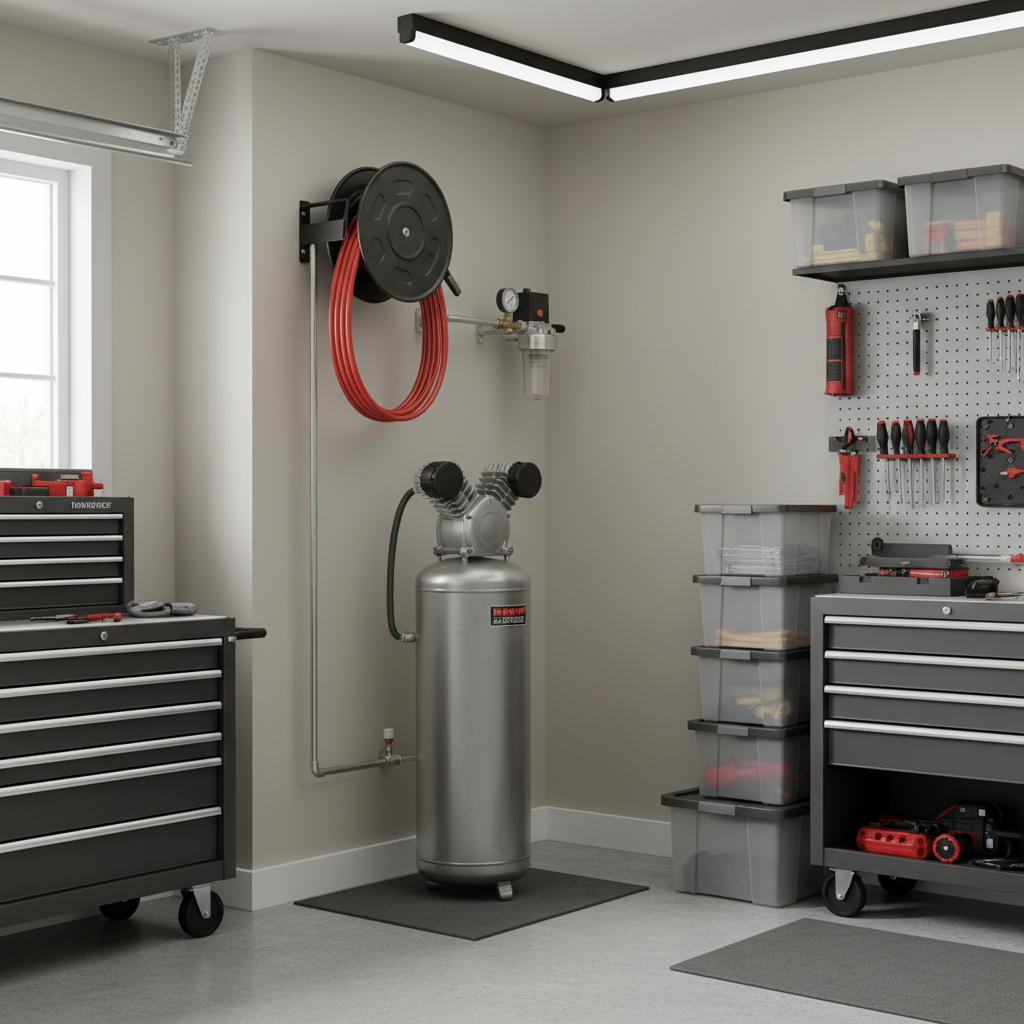
Common mistakes that make a “good” compressor feel bad
- Buying for PSI instead of CFM: high PSI doesn’t fix low airflow.
- Undersized hose: especially with impacts and air sanders.
- No water management: moisture in the line can ruin paint and shorten tool life.
- Ignoring the electrical reality: long extension cords can cause voltage drop and hard starts; use a proper circuit and consult an electrician if uncertain.
- Expecting a small compressor to run continuous tools: it will try, but it often runs hot and cycles constantly.
Key takeaways and a simple buying checklist
If you want the best air compressor for home garage use, you’re really trying to avoid two outcomes: waiting on the tank every five minutes, or hating the noise so much that the compressor becomes garage decor.
- Pick by CFM @ 90 PSI, then choose a tank size that matches your work rhythm.
- Plan the system: hose diameter, fittings, regulator, and moisture control matter.
- Be honest about tools: inflators and nailers need far less than sanders and grinders.
Action step: write down your top 3 air tools and their CFM requirements, then shop compressors that exceed that demand with headroom and a noise level you can live with.